|
The
Plus/4
The Plus/4 came after the VIC-20
and the Commodore 64 (about
1984), and is not software-compatible with either of those computers,
although it does share some hardware compatibility.Previously called
the "264" and later renamed to "Plus/4", this
new family of computers (also including the C116, C232 and
C364) were supposed to strike at the extremely successful Sinclair
computers.
The Commodore 232 was to be a 264 (Plus/4) with half the RAM, and
the Commodore 364 was to be a 264 (Plus/4) with built-in speech
capability (over 250 words), a 64K ROM and a 19-key numeric keypad.
 Both of these machines were never released - Commodore instead decided to keep
just the C116 (later called the 16) and C264 (Plus/4). Both of these machines were never released - Commodore instead decided to keep
just the C116 (later called the 16) and C264 (Plus/4).
Unfortunately, Commodore failed to notice that they would also
be competing against their own very successful computer, the Commodore
64. Eventually, only two of this family made it into production
- the C16 and the Plus/4. The Plus/4 had some advantages over the
C64: BASIC 3.5 has real graphics commands in it, and it used a dynamic
ROM banking scheme, so you got nearly 64K in BASIC (this was later
used on the Commodore 128).
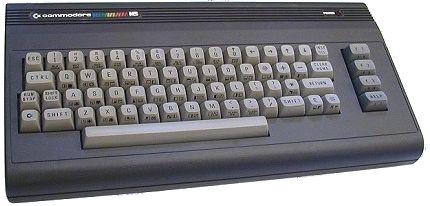
The Commodore 16
 The Commodore 16 was released after the Plus/4, as a cut-down version
with just 16K of RAM and lacked the modem port and built-in office software of the Plus/4. It shared its keyboard and "bread bin" case style with
the C64, but was intended as the replacement for the venerable VIC-20 as Commodore's entry-level home computer, which would put it up against other circa-$100 home computers including the Texas TI-99/4A, Timex-Sinclair TS1000 and Mattel's Aquarius. As it happens, Timex-Sinclair, Mattel, and TI all pulled out of the home computer market before the C16 was released. This computer turned out to be a huge failure, even more
so than the Plus/4. Although both computers' BASIC interpreter (version 3.5) was far more
advanced than that of the Commodore 64 (version 2.0), these machines
turned to be big business failures, primarily because they weren't C64-compatible, had less attractive sound/graphic capabilities, and lacked compatibility with the VIC-20/C64 Datassette and game ports. While these
machines had 121 colours, the lack of the great SID sound chip and
hardware sprites made them a wrong choice for gamers. And the 3+1 built-in
"business" software simply was not serious enough for
work. The C16's memory could be expanded relatively easily up to 64K to bring it up to game-compatible spec with the Plus/4, enabling it to run Plus/4 games. The Commodore 16 was released after the Plus/4, as a cut-down version
with just 16K of RAM and lacked the modem port and built-in office software of the Plus/4. It shared its keyboard and "bread bin" case style with
the C64, but was intended as the replacement for the venerable VIC-20 as Commodore's entry-level home computer, which would put it up against other circa-$100 home computers including the Texas TI-99/4A, Timex-Sinclair TS1000 and Mattel's Aquarius. As it happens, Timex-Sinclair, Mattel, and TI all pulled out of the home computer market before the C16 was released. This computer turned out to be a huge failure, even more
so than the Plus/4. Although both computers' BASIC interpreter (version 3.5) was far more
advanced than that of the Commodore 64 (version 2.0), these machines
turned to be big business failures, primarily because they weren't C64-compatible, had less attractive sound/graphic capabilities, and lacked compatibility with the VIC-20/C64 Datassette and game ports. While these
machines had 121 colours, the lack of the great SID sound chip and
hardware sprites made them a wrong choice for gamers. And the 3+1 built-in
"business" software simply was not serious enough for
work. The C16's memory could be expanded relatively easily up to 64K to bring it up to game-compatible spec with the Plus/4, enabling it to run Plus/4 games.
 A slightly modified version of the Commodore 16, the Commodore 116, was released only in Europe in December 1984. This computer was essentially the same as a Commodore 16 inside (also with 16K of memory), but in a smaller case similar to that of the Plus/4 and with chicklet-style rubber keys. It was able to run all Commodore 16 software, and Plus/4 software if memory was expanded to 64K. The C116 was priced cheaper than even the Commodore 16 to try to attract newcomers to the budget home computing market. Commodore stopped sales of the 116 in 1985 after only 51,000 were produced. Approximately 44,000 of these were sold in Germany. A slightly modified version of the Commodore 16, the Commodore 116, was released only in Europe in December 1984. This computer was essentially the same as a Commodore 16 inside (also with 16K of memory), but in a smaller case similar to that of the Plus/4 and with chicklet-style rubber keys. It was able to run all Commodore 16 software, and Plus/4 software if memory was expanded to 64K. The C116 was priced cheaper than even the Commodore 16 to try to attract newcomers to the budget home computing market. Commodore stopped sales of the 116 in 1985 after only 51,000 were produced. Approximately 44,000 of these were sold in Germany.
All computers in Commodore's 264-range used the same peripherals, which were different to the VIC-20 and C64 (although with adapters you could get them to work on the VIC and C64). The datasette model for the 264-range was VIC-1531, and the floppy disk drive was the VIC-1551.
By September 1986, the 264 line were in full liquidation, with the Plus/4 being sold for $79, with the 1541 floppy drives selling for $149 (down from their original price of $269), and printers selling for $119 (down from $200).
Using One Today
Making use of these computers today is made much easier through the use of the SD2IEC interface.
SD2IEC emulates the basic functions of a Commodore 1541 floppy disk drive so you don't have to wear out your old original tapes and disks. Simply plug it into your Commodore's serial port, prepare an SD card with some menu software on it and you're ready to go! , It's as slow to load and save as the 1541 floppy drive, but does support fast loaders like JiffyDos, Final Cartridge III, TurboDisk and Epyx Fastload. It supports files in the following formats: D64, D81, D71, M2I, and PRG. Sadly it doesn't support tape image files, e.g. T64 or TAP. The device typically draws its power from the cassette interface port More info here.
|
...see more C16 and Plus/4 news...
|


 Technical Details ...