|
Commodore was among the most influential IT companies throughout the 70s and 80s, and the computer they're most famous for is the Commodore 64. Sold in their millions from release (between 20 and 25 million eventually sold across the whole product range), it competed directly with the Sinclair ZX Spectrum and Atari computers for market dominance for many years. It is arguable who won this battle, with differing views depending on the market/geography.
The C64 (as it was soon abbreviated to) looked much better technically, especially in the areas of sound with the famous Commodore dedicated custom sound chip - SID - and smooth scrolling with native support for sprites. Over 10,000 programs have been written for the Commodore 64.
Internally codenamed VIC-30 (as it was to be the successor of the venerable VIC-20), and later renamed 64, Jack Tramiel set a deadline of the CES (Consumer Electronics Show) in January 1982 for broadcasting the forthcoming machine to the world. This gave the designers and engineers just over two months to come up with prototypes and software to show it off. This they acheived, and the 64 received applause from the off. Due to it's low cost relative to its competitors at the time, and the fact that Commodore distributed it not only through its authorised dealer network but also off department store shelves, it sold in great quantity. In the United States, many competitors such as the Atari 400 and 800, and the Texas Instruments TI99/4A were soon out of the market - they simply couldn't compete on a price for performance basis.
In the UK, the Sinclair ZX Spectrum had been launched a few months before, and was quickly gaining market dominance. The Sinclair retailed for just over half the cost of the C64, so Commodore couldn't rely on their previously successful US marketing strategy to work in Europe. At launch in March 1983, the C64 went on sale at £399 GBP.
 In May 1983, Commodore released the eagerly anticipated "Commodore Executive", renamed simply to "Commodore SX-64" for release at a price of $999. This was essentially a portable version of the 64, with a built-in 1541 floppy disk drive and a 5" colour screen - the first ever colour portable computer! While the standard 64 sold extremely well, the SX-64 did not, primarily thought to be due to the high price, sheer weight of the unit, lack of battery (you had to plug it into the mains for it to work), and lack of dedicated business software. Production ceased in 1986. Nowadays, however, these are very sought after among collectors, with an estimated sub-25,000 units sold worldwide. When the "Executive" was first shown to the public at the Consumer Electronics Show in the USA, a cut-down version was advertised - called the SX-100 - it contained a black & white screen. This was dropped in favour of the colour SX-64, so the SX-100 never reached production. A "DX-64" unit was also sold in small quantities. This model contained a second 1541 floppy drive in place of the floppy disk storage compartment above the first floppy drive. These are extremely rare, although several owners of SX-64s were known to add their own second floppy drive. In May 1983, Commodore released the eagerly anticipated "Commodore Executive", renamed simply to "Commodore SX-64" for release at a price of $999. This was essentially a portable version of the 64, with a built-in 1541 floppy disk drive and a 5" colour screen - the first ever colour portable computer! While the standard 64 sold extremely well, the SX-64 did not, primarily thought to be due to the high price, sheer weight of the unit, lack of battery (you had to plug it into the mains for it to work), and lack of dedicated business software. Production ceased in 1986. Nowadays, however, these are very sought after among collectors, with an estimated sub-25,000 units sold worldwide. When the "Executive" was first shown to the public at the Consumer Electronics Show in the USA, a cut-down version was advertised - called the SX-100 - it contained a black & white screen. This was dropped in favour of the colour SX-64, so the SX-100 never reached production. A "DX-64" unit was also sold in small quantities. This model contained a second 1541 floppy drive in place of the floppy disk storage compartment above the first floppy drive. These are extremely rare, although several owners of SX-64s were known to add their own second floppy drive.
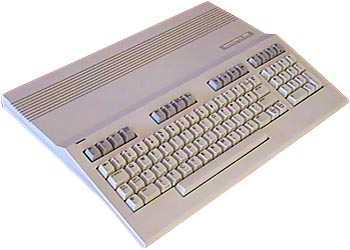 In January 1985 at the CES in Las Vegas, Commodore released what would be their last brand new 8-bit computer, the Commodore 128. In Summer 1984 Commodore's management realised their 264-series (the Plus/4 and C16) were not going to be the successor to the C64 they had planned them to be. So work got underway on correcting their past mistakes, most notably the lack of backward compatibility that consumers wanted, plus their desire to have support for the CP/M operating system thus broadening their usefulness in the small business market. Commodore chose to include full backward-compatibility with the 64. But the 128 was more than just a 64 with twice the RAM; it provided an 80-column mode with RGB output, and was powered by the MOS 8502 microprocessor (a newer version of the 6510 found in the C64) and a second CPU in the form of the Zilog Z80. This was the same CPU as in the Sinclair ZX Spectrum, but the purpose here was to allow CP/M programs to run, giving the C128 more attraction as a 'business' computer. Both CPUs however, could not run at the same time - it ran in either native C128 mode, CP/M mode, or C64 mode. The 128 also sported a total accessible memory capacity of 512K (if upgraded), and a new version of CBM BASIC, v7.0 with lots of extra commands for proper support of graphics and sound. Alongside the launch of the Commodore 128 came the Commodore 1902 colour composite/RGB monitor for $400, which supported the 80-column CP/M mode, and the 1571 double-sided disk drive. In January 1985 at the CES in Las Vegas, Commodore released what would be their last brand new 8-bit computer, the Commodore 128. In Summer 1984 Commodore's management realised their 264-series (the Plus/4 and C16) were not going to be the successor to the C64 they had planned them to be. So work got underway on correcting their past mistakes, most notably the lack of backward compatibility that consumers wanted, plus their desire to have support for the CP/M operating system thus broadening their usefulness in the small business market. Commodore chose to include full backward-compatibility with the 64. But the 128 was more than just a 64 with twice the RAM; it provided an 80-column mode with RGB output, and was powered by the MOS 8502 microprocessor (a newer version of the 6510 found in the C64) and a second CPU in the form of the Zilog Z80. This was the same CPU as in the Sinclair ZX Spectrum, but the purpose here was to allow CP/M programs to run, giving the C128 more attraction as a 'business' computer. Both CPUs however, could not run at the same time - it ran in either native C128 mode, CP/M mode, or C64 mode. The 128 also sported a total accessible memory capacity of 512K (if upgraded), and a new version of CBM BASIC, v7.0 with lots of extra commands for proper support of graphics and sound. Alongside the launch of the Commodore 128 came the Commodore 1902 colour composite/RGB monitor for $400, which supported the 80-column CP/M mode, and the 1571 double-sided disk drive.
In September 1988, Commodore released the 128D (D for "Desktop"), which had a separate keyboard and drive/PSU unit with a 1571 disk drive fitted internally. The desktop design came in an all-plastic case, depending upon when and where it was purchased (metal was the Cost-reduced model). The 128D models had a list price of $599 USD. Shortly after, Commodore managed to produce a cost-reduced version of the 128D, called the 128DCR, which had a metal casing but kept the plastic front panel and it lost the keyboard dock, and some internal connectors.
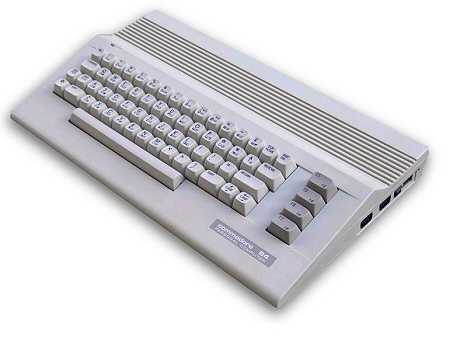 The C64's image got a cosmetic refresh in May 1986 with the casing being changed to a more sleek, sophisticated style, to match the image of the new Commodore 128. It was called the Commodore 64C. The style fit better with the competitors offerings of the time, and Commodore even gave the same treatment to some of its better selling peripherals, including the popular 1541 disk drive (aptly called the 1541C). Later Commodore also released the 1541-II model as well as a new 3.5" 800KB floppy drive called the 1581. The 64C also got newer versions of the popular SID, VIC and other I/O chips, and the new machine ran on 9V compared to 12V for the original 64. The 64C, however, did not sell as well as its forebear, as at this time it was now up against the new range of 16-bit computers including Commodore's own Amiga and the Atari ST. The C64's image got a cosmetic refresh in May 1986 with the casing being changed to a more sleek, sophisticated style, to match the image of the new Commodore 128. It was called the Commodore 64C. The style fit better with the competitors offerings of the time, and Commodore even gave the same treatment to some of its better selling peripherals, including the popular 1541 disk drive (aptly called the 1541C). Later Commodore also released the 1541-II model as well as a new 3.5" 800KB floppy drive called the 1581. The 64C also got newer versions of the popular SID, VIC and other I/O chips, and the new machine ran on 9V compared to 12V for the original 64. The 64C, however, did not sell as well as its forebear, as at this time it was now up against the new range of 16-bit computers including Commodore's own Amiga and the Atari ST.
 In 1990, a games console version of the C64 arrived on the scene, as the C64GS (C64 Games System). The cartridge port of the original PCB was repositioned to be vertical-mounted and a modified ROM replaced the BASIC interpreter with a boot screen to inform the user to insert a game cartridge. At its introduction Commodore promised 100 software titles would be available on cartridge, but the final number fell far short of this. The C64GS never sold outside of Europe, and was another Commodore commercial failure, with only approximately 80,000 units built and around 25% of these were sold. As a result, these models are now very rare and sought after by collectors. In 1990, a games console version of the C64 arrived on the scene, as the C64GS (C64 Games System). The cartridge port of the original PCB was repositioned to be vertical-mounted and a modified ROM replaced the BASIC interpreter with a boot screen to inform the user to insert a game cartridge. At its introduction Commodore promised 100 software titles would be available on cartridge, but the final number fell far short of this. The C64GS never sold outside of Europe, and was another Commodore commercial failure, with only approximately 80,000 units built and around 25% of these were sold. As a result, these models are now very rare and sought after by collectors.
The last Commodore 64Cs were intended to roll off production lines in 1995 after the discontinuation was announced by Commodore at the CeBIT in Hanover, Germany, in March 1994. They said at the time, "The 1541 costs more [to produce] than the C64 itself". Sadly, Commodore filed for bankruptcy just one month after this announcement.
|
...see more C64 news...
|


 Technical Details ...