


Caesar (1992) 
| Details (Commodore Amiga) | Supported platforms | Artwork and Media | |
|---|---|---|---|
| Publisher: Genre: Author(s): Minimum Memory Required: Maximum Players: Joysticks: Language: Media Code: Media Type: Country of Release: Comments: |  Impressions Software Ltd Impressions Software LtdStrategy 512K Yes Eng 3.5" Floppy disk Worldwide | Click to choose platform: Atari ST Commodore Amiga |
| Videos | Screenshots (Commodore Amiga) |
|---|---|
| (no videos on file) |   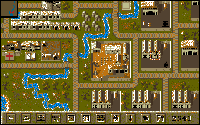 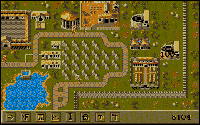 |
Please login to submit a screenshot
| Your Reviews |
|---|
 Iss 41 Dec 1992 (Amiga Format) 3rd Dec 2011 09:13
Romanes Eunt Domus? People called Romanes, they go the house? Nope. People called Amiga-owners, they build the houses. They also build the roads, the aqueducts and provide the education, the sanitation and keep the peace...
E verybody loves a fairy tales ending, but for Impressions, Caesar could well be the fairy tale beginning. After years of struggling to make an impression on the games world, this independent software house has finally come of age. Five minutes with Caesar will tell you, that you have to have this game. Once you have got it home, you can kiss the world goodbye. Five minutes’ play soon turns into five hours, then five days – and still it is impossible to tear yourself away.
Caesar is very much a mixture of games: there is a hearty chunk of Sim City-style construction work, except that everything has a gorgeous Roman flavour. There is a lump of Populous too, thanks to the different people who wander about the finely-paved streets that you build. There is even a bit of Railroad Tycoon-style mapwork to be done, linking up distant towns and villages to your Roman sim city. There is almost as much history and economics as in Civilization, with more detailed graphics. And, to cap it all, Caesar has wargaming action of the kind your find in many an SSI game, except that it is a lot better.
Because there is such a mixture, you would expect Caesar to be quite a bewildering game, but nothing could be further from the truth. It functions on three levels: The European map, the Provincial map, and the City map. The Emperor randomly chooses the European country that you are given control of, and that dictates what your Provincial map looks like. Each province has a capital city with its own map and that is where you start building.
Rome sweet Rome
Moving around between the different levels is dead easy, and once you have zoomed in to City level you can begin creating your city. To start with, it is jut a bunch of fields and rivers, so your first move is to build a Forum.
To the Romans, the Forum was everything. Their advanced civilization depended on places where they could go and speak their minds, exchange ideas and generally chip in to the running of their society. In Caesar, the Forum is the centerpiece of the city. Houses are laid out around it, or are connected to it by roads. Soon the buildings near the Forum soar in value and better buildings replace the humble tents you pitched to begin with.
But before anything gets started properly, you need to address the basic need for ware. Fountains have to be installed and connected via pipes from the nearest river. If there is no water, no-one will move in and your city will never gro. It is a bit like the problem of electric power in Sim City, only it is not as easy to supply a whole city with one pipe. You really need to incorporate the water supply into your city design or you will get hopelessly tangled and the fountains will stop gurging and dry up.
Once you have established a foothold, you have got to make your city grow and prosper. There are plenty of things to help attract new residents, like temples and amphitheatres. But there are also plenty of things you need to manage carefully, like security from invasion, dissatisfied subjects who riot and tear down houses, and the business of collecting taxes. It is a never-ending job.
Meanwhile, as you are learning how to cope with Roman city life, things are happening in the rest of the province. Barbarians are sure to pay a visit or twelve, and they can make life very awkward, especially if they make it all the way to your city. This is where your legions of soldiers come to the fore. On the Provincial map, you can move legions around, engaging in battles, patrolling trouble spots and establishing new forts and strongholds. The battles are fairly simple affairs, with a choice of five combat formations. There is even an option to resolve individual battles using Impressions’ earlier game Cohort 2. This gives the wargaming purist a chance to get all the detail, while keeping things simple for the player who is more interested in city-building. Because Cohort 2 is already available you do not have to wait six months for an expansion, like most other sim-games with addons.
Forum-nil
Aside from the city-building and fighting, there are still more things to be done. Controlling your population is done via the Forum screen where you can consult each of your main advisors for statistical data, which is beautifully presented in Roman-pillar style bar charts. Everything a good leader needs to know to run a city is tucked away in easily accessible maps and screens.
It is easy to get carried away with Caesar, because it really is a great game. It is certainly the best of the sim bunch, and it is a pretty good wargame too. It never seems to stop, either. Once you have got a province under control and everything is on the up and up, the Emperor pops over to offer you promotion.
You can decline this offer, choosing instead to stay for another 10 or 25 years if you have become particularly attached to your new home. If you take the promotion, you start all over again in a different part of Europe with a lump sum for building a new city plus a salary increase. After many years (in real terms, a good few weeks of play) you can make it to Emperor yourself, and then play the whole thing again.
Now that Impressions have proved what they are capable of, let us hope we see more games of the exceptionally high quality of Caesar, and I for one cannot wait to get started all over again.
Neil Jackson
PROVINCIAL AND MUTAL ASSURANCE
Beyond the city lies a whole province waiting to be subjugated and exploited. The real Romans were great at this game, bringing civilization and security to the people of outlying villages, but still making heaps of cash out of them. The population soon warmed to the Romans’ high standard of living and strong fortifications. Only a few tribes of die-hard barbarians really resisted, but they often made quite a mess of the Roman cities when they got through. Both Rome and Londinium were sacked by barbarian horedes during the Roman era.
In Caesar as leader of the province your task is to keep out the barbarians and bring extended civilization to the area. You do this on the Provincial level map, where you find your capital city (the one you have been landscaping) and a few far-flung villages. Barbarians regularly nip across the borders for a bit of rape and pillage, and you have got to stop them. You can build huge walls and towers (like Hadrian did) and post Legions in trouble spots to protect the locals. The most effective way of securing your future is to build roads from your provincial capital to each of the outlying towns. Once connected, the towns increase in size and help boos the level of trade back at your capital. If you can keep the peace, and expand your road network throughout the province, you are well on your way to a promotion the next time the Emperor visits.
E verybody loves a fairy tales ending, but for Impressions, Caesar could well be the fairy tale beginning. After years of struggling to make an impression on the games world, this independent software house has finally come of age. Five minutes with Caesar will tell you, that you have to have this game. Once you have got it home, you can kiss the world goodbye. Five minutes’ play soon turns into five hours, then five days – and still it is impossible to tear yourself away.
Caesar is very much a mixture of games: there is a hearty chunk of Sim City-style construction work, except that everything has a gorgeous Roman flavour. There is a lump of Populous too, thanks to the different people who wander about the finely-paved streets that you build. There is even a bit of Railroad Tycoon-style mapwork to be done, linking up distant towns and villages to your Roman sim city. There is almost as much history and economics as in Civilization, with more detailed graphics. And, to cap it all, Caesar has wargaming action of the kind your find in many an SSI game, except that it is a lot better.
Because there is such a mixture, you would expect Caesar to be quite a bewildering game, but nothing could be further from the truth. It functions on three levels: The European map, the Provincial map, and the City map. The Emperor randomly chooses the European country that you are given control of, and that dictates what your Provincial map looks like. Each province has a capital city with its own map and that is where you start building.
Rome sweet Rome
Moving around between the different levels is dead easy, and once you have zoomed in to City level you can begin creating your city. To start with, it is jut a bunch of fields and rivers, so your first move is to build a Forum.
To the Romans, the Forum was everything. Their advanced civilization depended on places where they could go and speak their minds, exchange ideas and generally chip in to the running of their society. In Caesar, the Forum is the centerpiece of the city. Houses are laid out around it, or are connected to it by roads. Soon the buildings near the Forum soar in value and better buildings replace the humble tents you pitched to begin with.
But before anything gets started properly, you need to address the basic need for ware. Fountains have to be installed and connected via pipes from the nearest river. If there is no water, no-one will move in and your city will never gro. It is a bit like the problem of electric power in Sim City, only it is not as easy to supply a whole city with one pipe. You really need to incorporate the water supply into your city design or you will get hopelessly tangled and the fountains will stop gurging and dry up.
Once you have established a foothold, you have got to make your city grow and prosper. There are plenty of things to help attract new residents, like temples and amphitheatres. But there are also plenty of things you need to manage carefully, like security from invasion, dissatisfied subjects who riot and tear down houses, and the business of collecting taxes. It is a never-ending job.
Meanwhile, as you are learning how to cope with Roman city life, things are happening in the rest of the province. Barbarians are sure to pay a visit or twelve, and they can make life very awkward, especially if they make it all the way to your city. This is where your legions of soldiers come to the fore. On the Provincial map, you can move legions around, engaging in battles, patrolling trouble spots and establishing new forts and strongholds. The battles are fairly simple affairs, with a choice of five combat formations. There is even an option to resolve individual battles using Impressions’ earlier game Cohort 2. This gives the wargaming purist a chance to get all the detail, while keeping things simple for the player who is more interested in city-building. Because Cohort 2 is already available you do not have to wait six months for an expansion, like most other sim-games with addons.
Forum-nil
Aside from the city-building and fighting, there are still more things to be done. Controlling your population is done via the Forum screen where you can consult each of your main advisors for statistical data, which is beautifully presented in Roman-pillar style bar charts. Everything a good leader needs to know to run a city is tucked away in easily accessible maps and screens.
It is easy to get carried away with Caesar, because it really is a great game. It is certainly the best of the sim bunch, and it is a pretty good wargame too. It never seems to stop, either. Once you have got a province under control and everything is on the up and up, the Emperor pops over to offer you promotion.
You can decline this offer, choosing instead to stay for another 10 or 25 years if you have become particularly attached to your new home. If you take the promotion, you start all over again in a different part of Europe with a lump sum for building a new city plus a salary increase. After many years (in real terms, a good few weeks of play) you can make it to Emperor yourself, and then play the whole thing again.
Now that Impressions have proved what they are capable of, let us hope we see more games of the exceptionally high quality of Caesar, and I for one cannot wait to get started all over again.
Neil Jackson
PROVINCIAL AND MUTAL ASSURANCE
Beyond the city lies a whole province waiting to be subjugated and exploited. The real Romans were great at this game, bringing civilization and security to the people of outlying villages, but still making heaps of cash out of them. The population soon warmed to the Romans’ high standard of living and strong fortifications. Only a few tribes of die-hard barbarians really resisted, but they often made quite a mess of the Roman cities when they got through. Both Rome and Londinium were sacked by barbarian horedes during the Roman era.
In Caesar as leader of the province your task is to keep out the barbarians and bring extended civilization to the area. You do this on the Provincial level map, where you find your capital city (the one you have been landscaping) and a few far-flung villages. Barbarians regularly nip across the borders for a bit of rape and pillage, and you have got to stop them. You can build huge walls and towers (like Hadrian did) and post Legions in trouble spots to protect the locals. The most effective way of securing your future is to build roads from your provincial capital to each of the outlying towns. Once connected, the towns increase in size and help boos the level of trade back at your capital. If you can keep the peace, and expand your road network throughout the province, you are well on your way to a promotion the next time the Emperor visits.
| Cheats | Trivia |
|---|---|
| There are no cheats on file for this title. | No trivia on file for this title. |
History
This title was first added on 1st February 2007
This title was most recently updated on 3rd December 2011