


Teenage Mutant Ninja Turtles II: The Arcade Game (1990) 
| Details (Nintendo NES) | Supported platforms | Artwork and Media | |
|---|---|---|---|
| Publisher: Genre: Author(s): Maximum Players: Joysticks: Language: Media Code: Media Type: Country of Release: Comments: |  Ultra Games Ultra GamesFighting Konami Ltd Yes Eng NES-2N-USA Cartridge USA, Europe, Japan | Nintendo NES |
| Videos | Screenshots (Nintendo NES) |
|---|---|
| (no videos on file) | 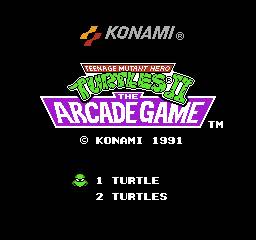 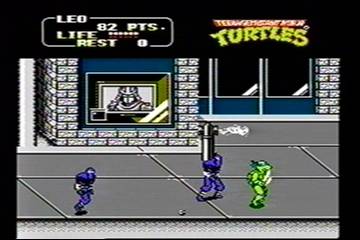 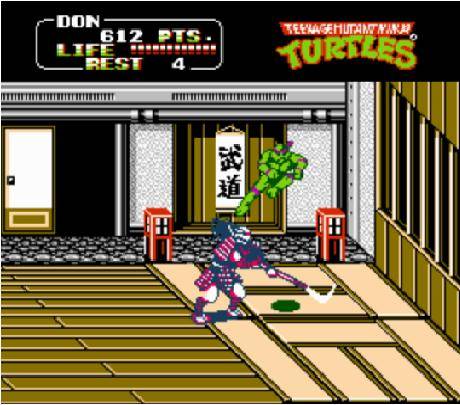 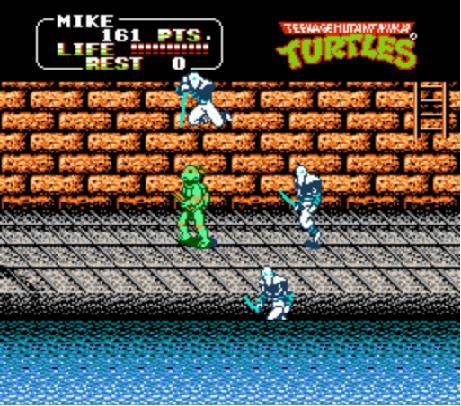 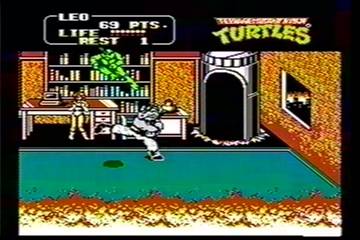 |
Please login to submit a screenshot
| Your Reviews |
|---|
 (Anonymous) (Unknown) 29th Mar 2012 04:42
"Not a bad conversion but it could use a bit more work."
I was probably one of the few people that actually remember playing the few people that played Teenage Mutant Ninja Turtles in the arcade before I played it on the NES. I first remember playing it in a mall in Tupelo, MS in 1989 for the first time and, minus two dollars later, I had more bodies beaten in that game than Uma Thurman had in both movies of Kill Bill. I think that I not only saw my bo smoking in the game but that the arcade machine itself was doing so as well.
Fast forward to 1991. I find out that Konami, under its division of Ultra, had made a conversion of Teenage Mutant Ninja Turtles. Immediately, I had some skepticism because I had remembered seeing the first TMNT game on the NES around the same time that I played the arcade version of this game and it was not really all that great to be honest with you, the reader of this guide (though the Amiga and other versions of that game are far less inspired, to put it nicely). Fearing that they had butchered a good arcade game, I found out that, to my surprise, they had actually did a pretty good job of converting it into an NES. Now this is my long, and I DO mean long, and no, I do not mean any pun with my real life last name, awaited review of this game.
Sure, Ubisoft may or may not hold the rights to the franchise now and the company that owns the rights to the franchise has since made a second series of the Foot Kicking Four, which is a mixed bag, really once you come down to it, but this is for the old-school TMNT, which, ironically, arcade versions of it are hidden in PS2, XBox, and GameCube versions of other TMNT games. Okay, I really mean it now, on to the review.
Like its arcade counterpart, you can control any one of the four Turtles. Sadly, they are only done in three colors total excluding their weapons, which are done in two or three colors. Would it have killed you to made their chests yellow, Konami/Ultra, let alone add a bit more detail to them? Also, though I like the longer life meters in the game, twelve things bother me about this game, its arcade counterpart, its easter egg siblings on the newer consoles, and its sequels on the NES and SNES:
1. Since the NES and SNES had devices (the NES Satellite and NES FourScore and some other thingies for the SNES, respectively), why did they not allow for four players in a game?
2. Why was Nintendo lazy on allowing more than five characters on a screen on most of its games for the NES and SNES? Could they have worked on those systems a bit and allowed extra memory for both graphics AND processor speeds? Really, that is just plain sloppy and half-hearted, Nintendo.
3. Why are there no energy gauges for the Foot Clan and other enemies in the game? (At least the SNES version of the second TMNT arcade game, which is Turtles in Time, at least had power gauges for its bosses)
4. Why were portraits of the various Foot Clan and other enemies not included with those energy gauges? (I am sorry that I ask for that but generally, most Konami beat-em-ups do NOT have life gauges for either its boss characters or its minion characters in their games.)
5. Could they not have fixed the choppy frame rate issues and made the game run a bit more smoothly?
6. Why did they port an entrance to this game to its sequel? Though that sequence was even BETTER in some parts than the first arcade TMNT (go figure THAT one), they SHOULD have left it in THIS game instead of moving it to its sequel.
7. Why are people saying that the Foot Clan and bosses took more hits to beat than they did in the NES version of this game? Also, were that theory true, then would those misnomered paper tigers in this version of the game be so hard to beat that they would almost be considered bosses in their own right?
8. If Question 7 is true, then on average, just how many hits DID it take to defeat a Foot Soldier or boss character in the arcade version of this game as opposed to this version of the game? To my knowledge, it took the same amount of hits in each game to take a Foot Soldier or other enemy down, so unless there was some sort of hidden difficulty levels in the arcade game that I did not know about, then those people who think that they took more hits to take down in the arcade version of the game as opposed to this version of the game clearly do not know what they are talking about in this game. Now on to the actual game itself.
9. Why can the Turtles, let alone the enemies, not use other weapons in a fight or retrieve their weapons in a fight?
10. Why can the Turtles and the enemies not use more punches and kicks in their arsenal? I wanted more of a Final Fight/Streets of Rage/Bare Knuckle feel to this game, too....:(
11. Where are the difficulty levels in this game? Seriously, some difficulty levels would have added major replay value into this game.
12. Where are the mini games and bonus stages? If you want added replay value, then you should add those things into this game as well, Konami.
The good news is that this game performs just like its arcade counterpart. The NES Advantage would be a better feel for the game than then NES Control Pad but it works just fine with a standard Control Pad, too. The controls are pretty much dead on from the arcade game, too, so there are no major issues there, which is DEFINITELY good for you gamers out there. As for level design, surprisingly, they are actually LONGER than the arcade counterparts AND there are two all new levels here as well as three all new bosses. One of them makes a return appearance in the arcade, SNES, and Super Famicom versions of Turtles in Time and the other two are somewhat difficult and NEARLY IMPOSSIBLE TO KILL, respectively. (You will find out what I mean when you play the game.)
In this game, there are also some new enemies and obstacles, such as a new kind of Foot Soldier, guys with orangutang arms that hop around like rabbits, are in Dallas Cowboys colors, as well as having matching stars on their gloves, and they throw daggers at you, laser firing, bunny hopping, crawling, and impaling scorpions, undefeatable spiked snowplows of death, holes that appear in the snow and in a straw floor that you can also fall through (joy), and those accursed paper tigers that spring from the walls, not to mention three all new bosses (two of which, sadly, never got a figure made by Playmates...:().
Graphically, it is TONS better than its prequel, and light years better than the early PC versions of that game, too. However, the graphics COULD have been a bit better, more colors could have been used (though the fire in the first level looks almost as good as its arcade counterpart AND it still blazes even when you pause the game, which totally rocks), and more memory should have been packaged into both this game and the NES and Famicom themselves. However, some issues are just plain unforgiveable, such as the piddly size of explosions and making the secondary color of most Foot Soldiers brown. BROWN? Hello, Earth to Konami, Foot Soldiers are purple and BLACK? Can you not spare the few extra seconds and make them look more like their arcade counterparts, please? Well, actually, SOME of the Foot Soldiers ARE in the correct colors but the majority of them are in the correct secondary color. However, their primary color is still that same crap brown color, which is totally disgusting. Also, why are Mousers only made in ONE COLOR SCHEME? Anyone who has played the arcade version knows that there were blue and white Mousers as well as red and white Mousers, so they could have at least been accurate and made the ones that came from the ship of Baxter Stockman as red and white. Also, in the second section of the second level, which the first part should have been made even longer and that the sewers should have been made into its own level, there is an inconsitency with that grate thing that comes down to crush you. In this version of the game, it is just four piddly rods that come down from the ceiling that try and crush you as opposed to that huge mean looking spiked grate thingy that was in the arcade version of this game. However, despite the cosmetic change, this is one of the things that produces a sound effect that actually sounds almost like the original sound effect of an object in the arcade game.
Speaking of sound effects, they are a mixed bag. They are not horrid and gut-wrenching awful but they could have been done better, despite this game being made on an MMX-3 NES graphics chip. Some of the effects sound nothing like the arcade at all, some of them never even existed in the arcade game, but some of them sound like muffled and clipped versions of things that made similar sounds in the arcade. If you hit something metal, then it should not make a "twoooh" sound, as it does in this game, but it should sound more metallic in its sound. Also, the explosions do not sound nearly as powerful as its arcade counterpart but, thankfully, they are not as dismal to hear as the ones in Turtles in Time.
Level design is actually longer in this game than it is in the arcade game, though I still feel that the street level should have been made even longer and that the swere level should have been made into its own level. I also wanted a boss for the skateboarding level (Level 4), too, because that would have been an epic fight right there. That is another missed opportunity, Konami. However, I can not be completely ticked at them because they DID include two all new levels and three all new bosses. I am still mad at them because the final room in the Technodrome is only one screen long as opposed to two screens like in the arcade. Still, at least they managed to make Krang pink in this version of the game, which is at least a small improvement in this place as opposed to the arcade game, where he was almost Barney purple (ick).
The music is adequate enough, though it could have been done with a bit more gusto. However, some tunes from the arcade have been dumped completely and replaced with all new music, such as the sewer level, which has a completely different tune than the arcade game and, to be honest, I actually liked the NES tune over the arcade one for that level. The three new tunes, one that was done for the aforementioned sewer level, and the ones that were done for Level 3 and Level 6, are very well done. While they are not variants of the same TMNT theme, at least they fit their environments well, they fit the mood of the places well, and they give you a break from hearing the old-school TMNT theme song from going into your ears every second. Even now, when it snows outside, I still hum the tune to Level 3 because it reminds me of all of that snow on that stage. It is is weird but it clings to me THAT much in my life.
Enemy difficulty is just as fierce, if not more so, than the arcade game. The newcomers to this game are certainly no slouches, either, especially those paper tigers. Baxter in his fly form is rather difficult to beat, but not as much as Rocksteady and Bebop together in that level on the arcade version of the game. Still, at least it provides enough of a challenge to make things interesting for the player. Tora is rather difficult to beat while Shogun is nearly impossible to kill. Needless to say, most of the things about the enemy AI are actually just as good, if not better, than their arcade counterparts, despite the limitations of both the car and the NES software.
The replay value of this game is actually HIGHER on this game than on the arcade game. Why do I believe this to be so in this game? Well, in total, you actually fight MORE enemies, not to mention more kinds of enemies, than in the arcade version of the game, you have three new bosses, you have two all new levels, the levels themselves are longer than the arcade counterpart for the most part, and you actually spend a half hour more or so playing this game than you do playing the actual arcade game. You also have to contend with all new environmental hazards and adjust to all new things in the game and this is why I actually now prefer playing THIS version of the game as opposed to the actual arcade game.
The bottom line:
Pros -
All of the great storyline of the arcade is here plus even more content is also here thanks to all new cutscenes and two all new levels.
It gives you more bang for the buck in terms of the gameplay.
The controls are dead-on accurate to the arcade game.
Some of the graphics are done rather well for an 8-bit system
Most of the songs sound good in this game.
Cons -
The game is still not long enough for my taste,
The Turtles and most of the enemies (excluding all of the new ones but the new ice blue and brown Foot Soldiers) could have been designed better and with more colors.
There is a stupid slow screen due to the limits of the NES/Famicom graphics processor.
The drum sections of music should have been done better in the game.
No more than three enemies can appear on the screen at a time.
No four-player game is allowed or even compatiable despite the NES having two devices that can allow four player games.
Neither this game, nor any of the TMNT games that are not one-on-one or Super Smash Brothers clones have energy gauges for the basic enemies and very few of them have energy gauges for the bosses, too.
No faces of your Turtles appear in the player location and no enemy icons also appear underneath your character in either this game or any other version of this game.
I like the color design for the different energy gauges that the Turtles have in the arcade game better than the bland colors that are in this game, though, to its credit, you actually CAN live a bit longer in this game, too.
This game and its arcade and newer generation console which have this game as a hidden item usually have them divided up into little bits instead of one large bar as the newer games of TMNT are usually designed to have in their games.
The bottom line is that, despite its flaws, I actually like more about this game than I actually do about the game that it was based on in the first place because it at least tries to do a lot of things better than its arcade counterpart. While it is not by any means a perfect port, and considering that it is an 8-bit system, that would be impossible, it does hold its own as one of the premier beat-em-ups to own on the NES or Famicom.
Is it worth buying? Well, to be honest, since no store would sell an NES game, that is, unless you live in one of those big cities with a retro store, then chances are the only places that you will find this game are at a flea market, a swap meet, a garage sale, a yard sale, from a friend or family memeber, some place like Goodwill, or some online auction place like eBay. If you DO manage to find it, then by all means buy it as it is one of the better games for the NES. Now if Konami, and now Ubisoft, will improve on what made the older games so great in the first place, then I will be happy.
jessealanlong2
Keeping it real since 1980.
Reviewer's Score: 8/10, Originally Posted: 01/29/07
| Cheats | Trivia |
|---|---|
| There are no cheats on file for this title. | No trivia on file for this title. |
History
This title was first added on 7th March 2006
This title was most recently updated on 29th March 2012