


Klonoa: Door to Phantomile (1998) 


| Details (Sony Playstation) | Supported platforms | Artwork and Media | |
|---|---|---|---|
| Publisher: Genre: Author(s): Maximum Players: Joysticks: Language: Media Code: Media Type: Country of Release: Comments: |  Namco NamcoPlatform / 3D Namco SCPH-1010/1080 or Dual Shock SCPH-1200 controller Eng SCES-00942 DVD (Protected) USA, Europe, Japan | Sony Playstation |
| Videos | Screenshots (Sony Playstation) |
|---|---|
| (no videos on file) | 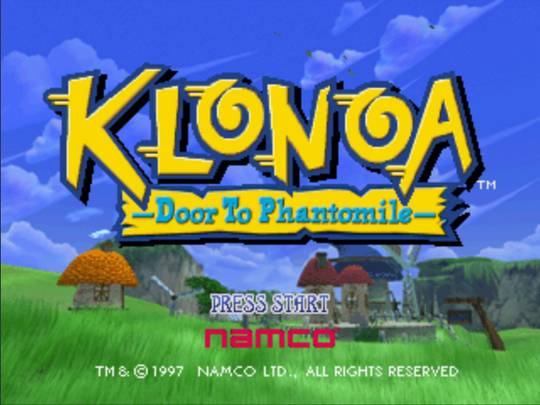 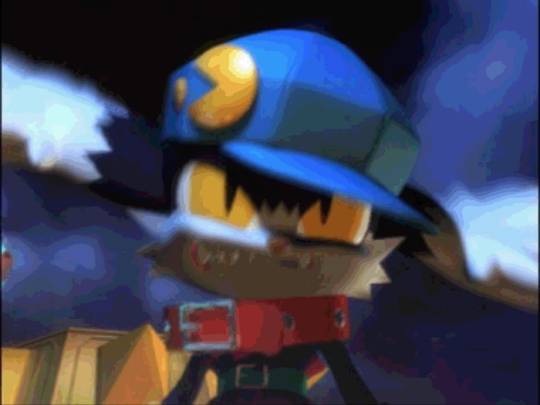 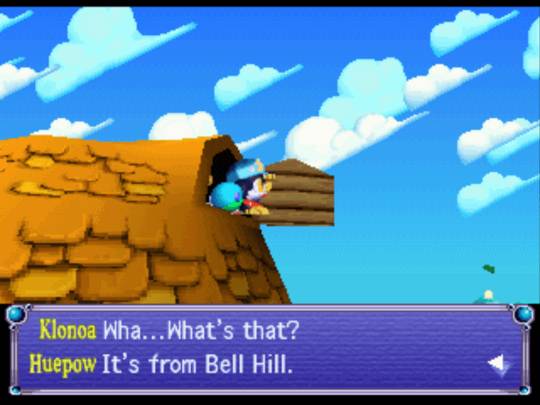  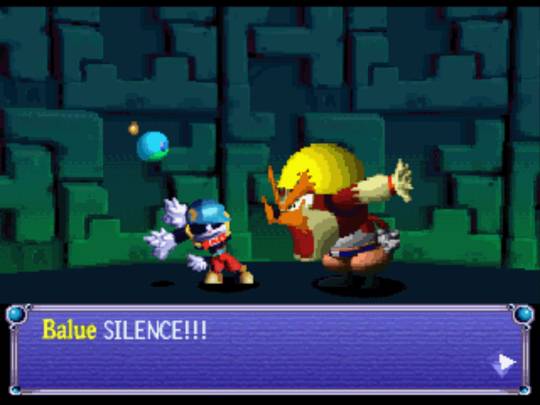 |
Please login to submit a screenshot
| Your Reviews |
|---|
 (Anonymous) (Playstation Review) 17th Apr 2012 09:52
"It's as cute as a kitten, but don't hold that against it."
Ah, simpler times. Klonoa: Door to Phantomile is part of a dying breed, a side-scrolling platform game. The packaging for Klonoa claims that its “‘Guided 3-D’ construction gives players a vast 3-D world without the aimless and wandering feel of many other 3-D games.” It’s a valiant effort by Namco to make it seem like something else, but it’s pure 2D bliss, following in the footsteps of classic platformers such as Super Mario Bros., Sonic the Hedgehog, and Donkey Kong Country. I’ve said it before, and I’m going to say it again here; I wish more developers these days would remember that there are still great things can be done in 2D.
The game starts with a dream: Klonoa dreamt that a flying ship crashed into a hillside nearby, and a nightmarish shadow began covering the land. That wouldn’t be such a big deal except that one day Klonoa’s dream came true, and he, along with his friend (and Ring Spirit) Huepow, set out to investigate. The ensuing adventure will lead them across the various themed kingdoms of Phantomile. Like all good platformers before it, these different kingdoms provided the designers the means to create the prerequisite jungle, cave, water, and sky-bound boards, and they did a bang-up job.
The level design in Klonoa is impeccable. None of the boards is a simple trek from left to right, so you can’t just bludgeon your way through without stopping to get your bearings. There are lots of platforming puzzles to figure out, many of which are very cleverly put together. In order for Namco to claim this as being more than “just a 2D game,” the designers made excellent use of placing objects and enemies in foregrounds and backgrounds, so there is a semblance of 3D gaming here. You’d think that this could be rather confusing perspective-wise, but I honestly can’t recall any instances where it was difficult to tell what objects were in which plane.
There are a dozen main levels in Klonoa, labeled as Visions, in order to go along with the dreaming motif. Each is filled with gems (think of them as the coins in Super Mario Whatever), and 6 Phantomilians to be rescued. Rescuing them all is strictly optional, but if you’re any kind of gamer, you’ll make sure to get them all. There are hidden/invisible items on most boards, and the only way you’ll know they’re there is by paying attention to shadows on the ground. Every second board ends with a boss battle, and they’re genuinely fun for a change.
Klonoa actually doesn’t have a lot of moves, but the developers used what he’s got extremely well. Of course Klonoa can jump, but he can also hang in the air for an extra second or so because his ears (at least, I think those are his ears) will flap if you hold down the jump button, and that will often be the difference between making a jump correctly and falling to your doom. Klonoa’s main offensive weapon is the wind bullet, which will remind many gamers of Dig Dug, since it inflates enemies, rendering them harmless to our hero. Klonoa will pick up smaller enemies that are inflated automatically, and they can then be used as weapons by throwing them. The most important move to grasp in the game is the double jump, which is done by pressing jump in mid-air while carrying an enemy. The dubious physics behind this move is that Klonoa fires the enemy downward, forcing himself upward. However it works, it’s pretty cool, and it comes into play a lot.
I’ve been avoiding the subject since I don’t have a clear answer to the question, but what exactly is Klonoa? I simply assumed that he is some sort of cat-like creature, but he could also be a dog or some sort of rodent, too. I thought I saw some resemblance to PaRappa the Rapper, but that really doesn’t hold up when you put them next to each other. Those ears (wings?) keep him from being easily classified, so maybe it’s best to leave it be. Anyway, I think the character design in Klonoa is terrific. There’s a memorable cast of strange allies and villains. I really like Joka, a recurring villain who’s more bluster than anything else. (Is it just me, or did it seem like everyone was calling him “Jerk?”) The generic enemies are the Moos, who look suspiciously similar to Pikachu, which is all the more reason to show them no mercy.
Some are going to overlook Klonoa simply because the characters in the game are on the cutesy side, and that’s too bad. The game’s graphics are bright and colorful, and they all look fantastic. I simply did not see any graphical glitches in the game; the visuals are extremely polished. It surely helps that the perspectives are fixed, but the view of the action is always perfect for doing whatever it is that needs to be done. The CG cinemas are equally impressive, and they rank up there with some of the best that Namco has produced on the PSX.
The music in Klonoa will probably not appeal to everyone. In keeping with the rest of the game, it is mostly light and bouncy stuff, and some of it is very reminiscent of the early Super Mario music in its instrumentation. Personally, I really like Klonoa’s soundtrack. I also like the voice work in the game, even though most of it is done in cutesy, squeaky voices. All of the hours I’ve spent with the Bust-A-Move games have really ruined me, I’m afraid. Most characters are speaking Japanese, but some are using nonsense vocabularies (Huepow for sure; Ghadius I’m not absolutely sure). Since the game is nice enough to translate it via a text window below the action, you won’t be left scratching your head. The other sounds in the game are appropriate for the aforementioned light theme, including lots of bouncing noises for the inflated enemies. For some reason I really like the sound Klonoa makes when he’s being spun around by a fan.
If there is one major drawback in Klonoa: Door to Phantomile, it’s that the game isn’t terribly long, and experienced gamers will find it isn’t too difficult. That wouldn’t stop me from recommending it for everyone, though. The game is good enough to play over and over, and the later stages of the game can give you a workout. Since the game wasn’t produced in mass quantities or marketed heavily by Namco, it has gotten rather hard to come by. Buying it cheap will only get harder, so if you’ve got to watch your video game dollars, Klonoa might make a better rental than a purchase. I for one am glad to have it in my collection.
Reviewer's Score: 9/10, Originally Posted: 01/21/01, Updated 01/21/01
Ah, simpler times. Klonoa: Door to Phantomile is part of a dying breed, a side-scrolling platform game. The packaging for Klonoa claims that its “‘Guided 3-D’ construction gives players a vast 3-D world without the aimless and wandering feel of many other 3-D games.” It’s a valiant effort by Namco to make it seem like something else, but it’s pure 2D bliss, following in the footsteps of classic platformers such as Super Mario Bros., Sonic the Hedgehog, and Donkey Kong Country. I’ve said it before, and I’m going to say it again here; I wish more developers these days would remember that there are still great things can be done in 2D.
The game starts with a dream: Klonoa dreamt that a flying ship crashed into a hillside nearby, and a nightmarish shadow began covering the land. That wouldn’t be such a big deal except that one day Klonoa’s dream came true, and he, along with his friend (and Ring Spirit) Huepow, set out to investigate. The ensuing adventure will lead them across the various themed kingdoms of Phantomile. Like all good platformers before it, these different kingdoms provided the designers the means to create the prerequisite jungle, cave, water, and sky-bound boards, and they did a bang-up job.
The level design in Klonoa is impeccable. None of the boards is a simple trek from left to right, so you can’t just bludgeon your way through without stopping to get your bearings. There are lots of platforming puzzles to figure out, many of which are very cleverly put together. In order for Namco to claim this as being more than “just a 2D game,” the designers made excellent use of placing objects and enemies in foregrounds and backgrounds, so there is a semblance of 3D gaming here. You’d think that this could be rather confusing perspective-wise, but I honestly can’t recall any instances where it was difficult to tell what objects were in which plane.
There are a dozen main levels in Klonoa, labeled as Visions, in order to go along with the dreaming motif. Each is filled with gems (think of them as the coins in Super Mario Whatever), and 6 Phantomilians to be rescued. Rescuing them all is strictly optional, but if you’re any kind of gamer, you’ll make sure to get them all. There are hidden/invisible items on most boards, and the only way you’ll know they’re there is by paying attention to shadows on the ground. Every second board ends with a boss battle, and they’re genuinely fun for a change.
Klonoa actually doesn’t have a lot of moves, but the developers used what he’s got extremely well. Of course Klonoa can jump, but he can also hang in the air for an extra second or so because his ears (at least, I think those are his ears) will flap if you hold down the jump button, and that will often be the difference between making a jump correctly and falling to your doom. Klonoa’s main offensive weapon is the wind bullet, which will remind many gamers of Dig Dug, since it inflates enemies, rendering them harmless to our hero. Klonoa will pick up smaller enemies that are inflated automatically, and they can then be used as weapons by throwing them. The most important move to grasp in the game is the double jump, which is done by pressing jump in mid-air while carrying an enemy. The dubious physics behind this move is that Klonoa fires the enemy downward, forcing himself upward. However it works, it’s pretty cool, and it comes into play a lot.
I’ve been avoiding the subject since I don’t have a clear answer to the question, but what exactly is Klonoa? I simply assumed that he is some sort of cat-like creature, but he could also be a dog or some sort of rodent, too. I thought I saw some resemblance to PaRappa the Rapper, but that really doesn’t hold up when you put them next to each other. Those ears (wings?) keep him from being easily classified, so maybe it’s best to leave it be. Anyway, I think the character design in Klonoa is terrific. There’s a memorable cast of strange allies and villains. I really like Joka, a recurring villain who’s more bluster than anything else. (Is it just me, or did it seem like everyone was calling him “Jerk?”) The generic enemies are the Moos, who look suspiciously similar to Pikachu, which is all the more reason to show them no mercy.
Some are going to overlook Klonoa simply because the characters in the game are on the cutesy side, and that’s too bad. The game’s graphics are bright and colorful, and they all look fantastic. I simply did not see any graphical glitches in the game; the visuals are extremely polished. It surely helps that the perspectives are fixed, but the view of the action is always perfect for doing whatever it is that needs to be done. The CG cinemas are equally impressive, and they rank up there with some of the best that Namco has produced on the PSX.
The music in Klonoa will probably not appeal to everyone. In keeping with the rest of the game, it is mostly light and bouncy stuff, and some of it is very reminiscent of the early Super Mario music in its instrumentation. Personally, I really like Klonoa’s soundtrack. I also like the voice work in the game, even though most of it is done in cutesy, squeaky voices. All of the hours I’ve spent with the Bust-A-Move games have really ruined me, I’m afraid. Most characters are speaking Japanese, but some are using nonsense vocabularies (Huepow for sure; Ghadius I’m not absolutely sure). Since the game is nice enough to translate it via a text window below the action, you won’t be left scratching your head. The other sounds in the game are appropriate for the aforementioned light theme, including lots of bouncing noises for the inflated enemies. For some reason I really like the sound Klonoa makes when he’s being spun around by a fan.
If there is one major drawback in Klonoa: Door to Phantomile, it’s that the game isn’t terribly long, and experienced gamers will find it isn’t too difficult. That wouldn’t stop me from recommending it for everyone, though. The game is good enough to play over and over, and the later stages of the game can give you a workout. Since the game wasn’t produced in mass quantities or marketed heavily by Namco, it has gotten rather hard to come by. Buying it cheap will only get harder, so if you’ve got to watch your video game dollars, Klonoa might make a better rental than a purchase. I for one am glad to have it in my collection.
Reviewer's Score: 9/10, Originally Posted: 01/21/01, Updated 01/21/01
(Anonymous) (Playstation Review) 17th Apr 2012 09:50| Cheats | Trivia |
|---|---|
| There are no cheats on file for this title. | No trivia on file for this title. |
History
This title was first added on 16th May 2006
This title was most recently updated on 17th April 2012